ENTERPRISE WEBSITE REDESIGN
Enterprise redesign that doesn't stop at launch.
Craft&Crew redesigns enterprise websites on Webflow Enterprise: the strategy, the experience, the design system, and the way your team runs the site afterward. Our in-house demand generation strategists sit in discovery from day one, so the new site launches with traffic planned, not hoped for.


Redesign experience you won't find at a typical Webflow agency.
NEARLY 20 YEARS
Designing and building websites for complex organizations
700+
Enterprise web projects
WEBFLOW ENTERPRISE
One of Webflow's select Enterprise Premium Partners
ROUGHLY HALF OUR TEAM
An in-house demand generation and paid media practice
LET'S START HERE
Most websites don't fail. They fall behind.
Your current website probably did its job. It launched, it carried the brand, and it has been publishing ever since. Then the business changed: new products, new audiences, new campaigns, a new way buyers research before they ever talk to sales. The website kept the shape it had on launch day.
That is why most redesigns are not really about the look. They are about a site whose structure, content, and workflow no longer match the organization it serves. A new visual layer on the same structure looks better for a year and then falls behind again.
REDESIGN, MIGRATE, OR OPTIMIZE?
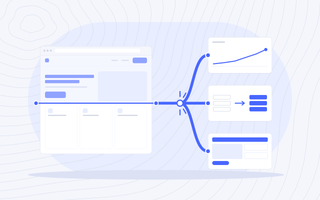
Not every tired website needs a redesign.
If the structure is sound and the problem is conversion or content, optimization will move the numbers faster and for less. If the platform is what slows the team down, a migration may matter more than a new design. A redesign earns its cost when the structure, the experience, and the way the site is run no longer fit the business.
Our first step isn't selling you a redesign. It's understanding whether you need one.
BEFORE THE FIRST SCREEN
A redesign isn't a new coat of paint.
Before anything is designed, we need to understand what the current site is doing, who it is doing it for, and what it needs to do next.
Audiences and journeys
Who arrives, what they came for, and the path from first visit to conversation, mapped from research and analytics rather than the org chart.
Content
What exists, what performs, what is missing, and what nobody has touched in years. Most sites carry more pages than they need and fewer than they should.
Brand and design
How the brand translates to screens and components, with accessibility built in from the first decision rather than audited in at the end.
Structure
Information architecture, templates, and the content model underneath, including the structures that made sense at launch and no longer do.
Platform and workflow
Who publishes, how quickly, with which approvals, and how much routine work still waits on a developer.
Measurement and demand
Analytics, conversion paths, and the campaigns that will drive traffic to the new site, planned with our demand generation strategists from the start.
DESIGN THE SYSTEM, NOT THE PAGES.
Don't redesign 200 pages. Design the system that builds them.
A redesign that produces a set of finished pages starts ageing the day it launches. A redesign that produces a governed design system keeps producing good pages long after we have handed it over.
So instead of starting with pages, we ask:
Which templates does the site actually need? Which components will marketing use every week? What should your team be able to build without a developer? Which pages earn their traffic, and which earn nothing? What content should be rewritten, merged, or retired? Where will each campaign land? What shouldn't make the trip at all?
The goal isn't a better-looking version of today's website. It's a website your team can keep improving.
A DIFFERENT OPERATING MODEL
Designed for the team that runs it.
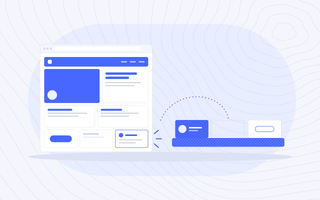
Most enterprise websites still run on a request queue: marketing asks, a ticket is filed, a developer builds, QA checks, a release ships, and the page goes live days or weeks later.
A redesign on Webflow Enterprise changes the order. The governed design system comes first, marketing builds from it, someone reviews, the page publishes, and the team measures and improves. The brand stays protected, and the developer queue stops being the bottleneck.
Less time keeping the website running. More time making it perform.
THE BUSINESS CASE
We don't just redesign the website. We redesign the economics of running it.
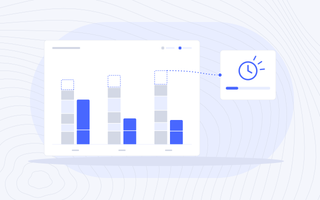
The cost of a website was never only the redesign. It is everything that follows: developer time for routine changes, agency retainers, hosting and maintenance, campaign pages built from scratch, and the internal hours spent coordinating all of it.
And there is the cost that rarely appears in the budget: what does it cost when marketing has to wait?
We'll model your current operating cost against the redesigned site on Webflow Enterprise over three years, including both the technology and the people required to run each.
REDESIGN METHODOLOGY
How a redesign runs
01. Discover
Stakeholder interviews, analytics, a content inventory, and the campaigns the site needs to support, with demand generation strategists in the room.
02. Separate what works from what doesn't
Decide what the current site does well and should keep, what needs to change, and what can be retired.
03. Architect
Information architecture, templates, content model, and the component inventory the design system will need, agreed before visual design begins.
04. Design the system
Visual design and the design system, reviewed in working prototypes rather than static mockups, with accessibility checked as each component is designed.
05. Build on Webflow Enterprise
The production build, assembled from the design system, with integrations connected and tested as they go in. AI in the workflow shortens the path; experienced people make the judgement calls.
06. Migrate content and protect search equity
Content moved into the new structure, with URLs, redirects, metadata, structured data, and internal links mapped page by page before launch.
07. Launch, measure, and optimize
A controlled launch, close monitoring of search, analytics, and conversion in the weeks after, and the start of the work that keeps the site improving.
ENTERPRISE REDESIGN
A redesign is a public launch. Treat it like one.
When an enterprise website changes, everyone notices at once: customers, prospects, search engines, and the people inside the organization. A missed redirect can erase years of search equity. A broken form can stop lead flow on launch day. An accessibility gap can become a compliance problem. A design system nobody understands can send marketing back to the developer queue within a month.
That is why our process puts real effort into planning, validation, training, and QA before launch. We specialize in no-fail mandates: projects where the website matters too much for mostly right to be good enough.
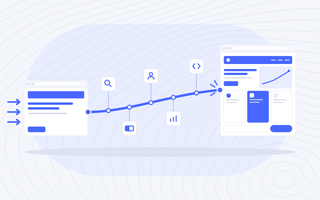
LAUNCH IS DAY ONE
Launch isn't the finish line.
A new website is the start of a better web operation, not the end of a project. Once it is live, the same Craft&Crew team can keep improving it: search and AI visibility, conversion optimization, testing and personalization, analytics, and ongoing design and development. Roughly half of Craft&Crew is our in-house demand generation and paid media practice, so the campaigns that drive traffic to the site come from the team that built it.
We don't measure a redesign by whether it launched on time. We measure it by what your team can do six months later.
Built for regulated and complex sectors.
Enterprise Website Redesigns.

Banking & Financial Services
Redesigns that hold up in a compliance review. Accessibility, approval workflows, and governance are designed in, and one design system keeps every business line on brand.

Telecom & ISPs
Multiple brands, multiple languages, and product pages that change weekly. A shared design system lets each brand move quickly without drifting apart.

SaaS & AI
A website that keeps pace with the product. Marketing ships launch pages and experiments from the design system instead of waiting on engineering.

B2B
Long buying cycles and many stakeholders. A site structured around how buyers evaluate, with demand generation designed in so every page has a job in the pipeline.
Common questions
Should we redesign, or just fix what we have?
It depends on what is holding the site back. If the structure is sound and the problem is conversion, content, or search, optimization will usually move the numbers faster and for less. If the structure, experience, and workflow no longer fit the business, a redesign earns its cost. We look at the site before recommending either.
How long does an enterprise website redesign take?
It depends on the size of the site, the number of templates and integrations, the content that has to move, and how many groups need to sign off. We set the timeline at the end of discovery, once we understand the site, rather than quoting one before we have seen it.
Do we have to move to Webflow to redesign with you?
Our redesigns are built on Webflow Enterprise, because it lets marketing teams run the site without a developer queue. If you are not sure Webflow is right for your organization, start with WebOps Strategy, which compares the options before anyone commits to a build.
Will a redesign affect our search rankings?
Any significant redesign carries some search risk, and no responsible partner should promise otherwise. We reduce it with URL mapping, redirects, preserved metadata and structured data, pre-launch crawling, and close monitoring of search performance after launch.
What does our marketing team get at launch?
A governed design system in Webflow, page templates built from it, roles and permissions set up for your approval process, documentation, and training. The goal is a team that can publish confidently on day one without filing a ticket.
Can you redesign the site and run the campaigns that drive traffic to it?
Yes. Our in-house demand generation and paid media practice joins at discovery, so the site and the campaigns are planned together and launch together. A campaign is only as good as the page it lands on.
What happens after launch?
The same team can stay on. Growth & Optimization covers search, AI visibility, conversion, and experimentation. Managed Website covers day-to-day operations. Many clients run both, so the site keeps improving instead of waiting for the next redesign.
Not sure you need a redesign?
We'll look at your current website, how your team runs it, and what it needs to do over the next three years, then tell you whether a redesign, a migration, or focused optimization will get you there fastest.
If a redesign is the answer, you'll be talking to the team that would build it. If it isn't, we'll tell you that too.